A couple of years ago a window repair company did a presentation for a continuing education class I attended. At the presentation the outrageous claim was made that an inordinate amount of premature failure of vinyl window seals was starting to happen.
The problem involved a particular type of spacer used to separate the panes of glass.
Being skeptical, I did a quick Google search of the issue and could find nothing. All I could find was page after page of nothing but praise for the new technology of these spacers—called “warm edge” technology. Even now, two years later, there is still scant information on the Internet regarding any issues with these spacers except for several hits for the company making the claims that they are failing.
Since I too am seeing more failure of this type of seal than the old metal tube type spacer, I thought perhaps it was time to see what experience others were having related to this issue. If nothing else it will result in my website showing up in the search results for the problem—along with the window repair company.
Typical spacers for windows have a life expectancy of about 25 years—-so failure of window seals happen. It is just a matter of when. In my opinion 25 years is too short of a time frame and part of the reason why replacing windows will never pay for themselves in terms of energy savings. By the time they do, they will need replacement. Of course the window hawkers are not going to tell you this. Certainly if we have a particular component of double pane windows that is causing them to fail in less than 10 years we potentially have a huge problem.
Here is a little diagram that will attempt to show how these newer spacers, called “warm edge” spacers are different from conventional spacers and in theory better. Truly, on paper they are genius, but in practice, apparently, not so much genius. There are different styles depending on manufacturer and I will not attempt to discuss the different types. It is possible that only one of the types is having this issue—and perhaps only one manufacturer.
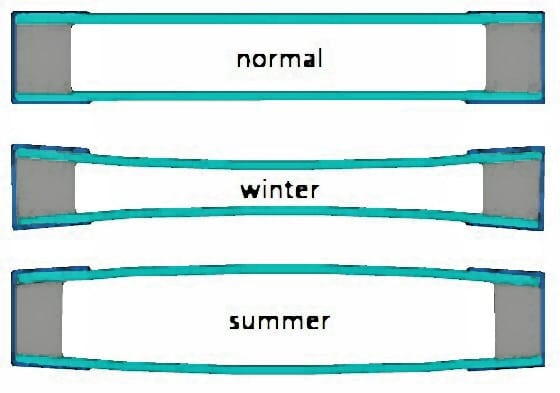
How warm edge spacers work
Can you see how the edges of the blue channel that holds the glass “theoretically” flex with the curvature of the glass in the bottom two examples?
Basically all the spacers are is a channel filled with desiccant material. Because the edges of the channel can flex with the glass, as the glass seasonally becomes convex or concave the seal should theoretically be more stable. What is perhaps more perplexing is exactly “why” the theory does not seem to be holding up under “practice.”
In the following pictures you can see the effect of the sun on the South windows of a home that is only 10 years old.
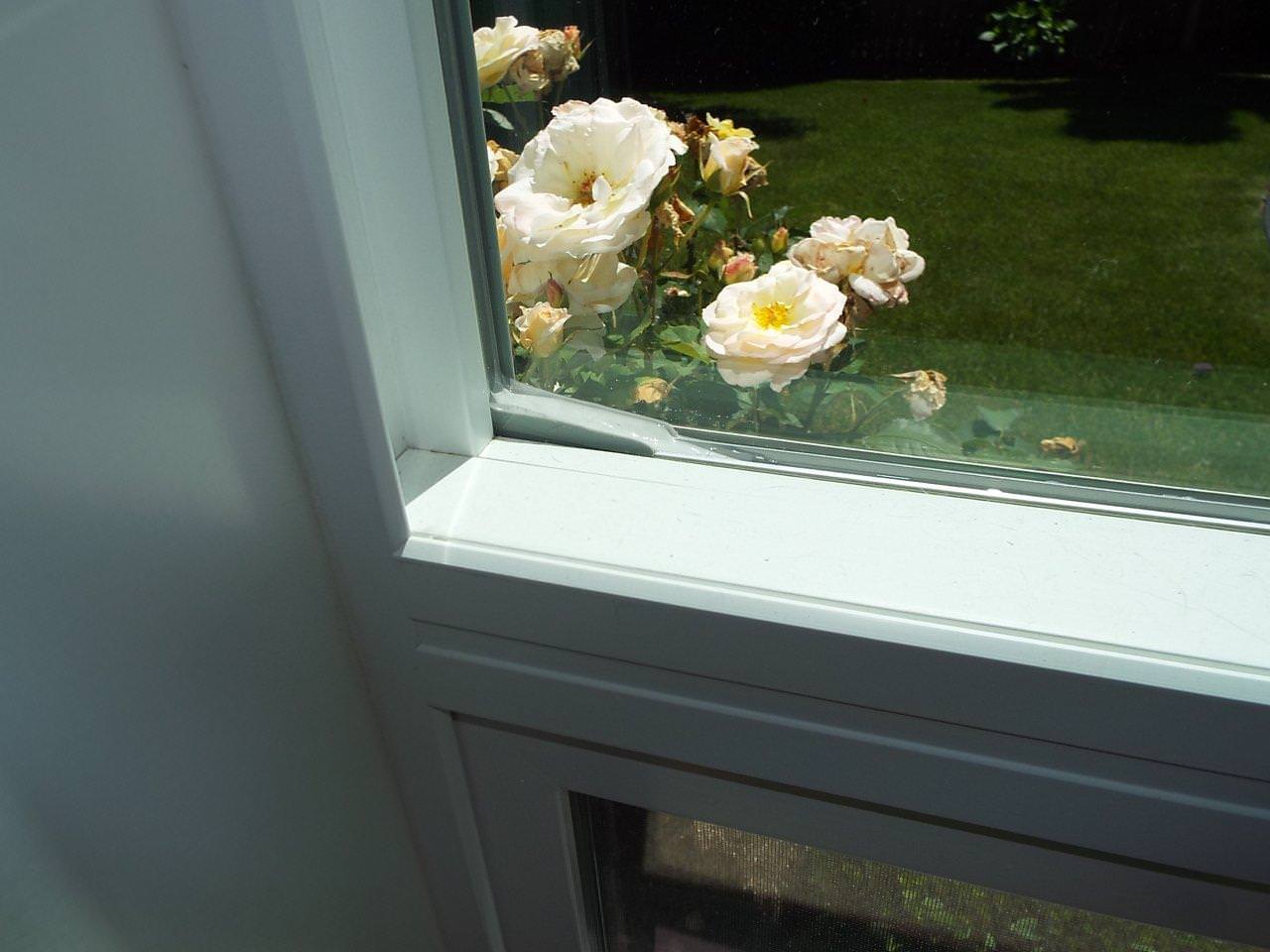
Slumping Desiccant material—things are not looking rosy
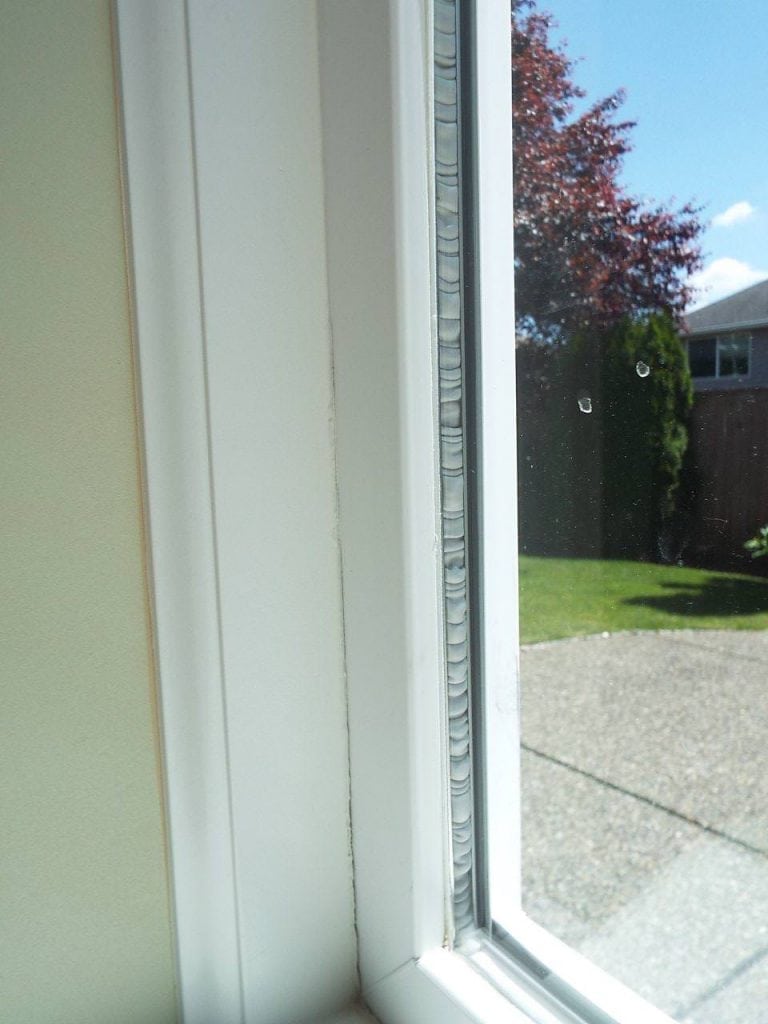
Slumping Desiccant in the side channel
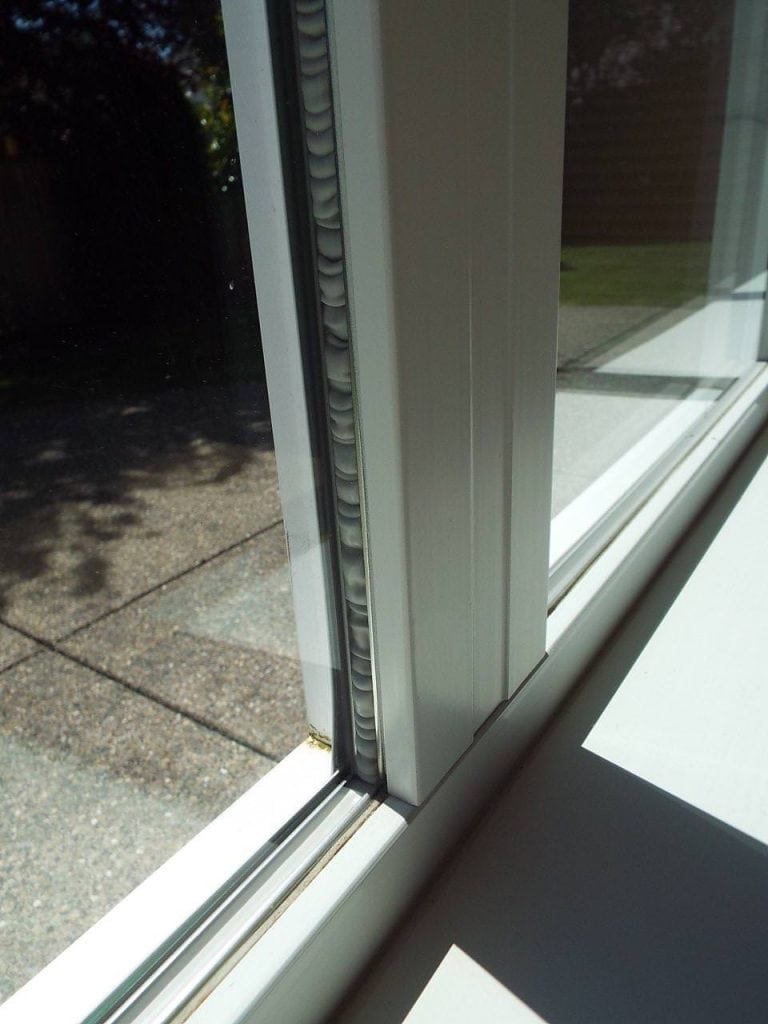
Slumping desiccant in a side channel
The desiccant material is slumping in the side channels and flowing out into the bottom channels. Rusting of the channels is also common as can be seen in this window from the same house.
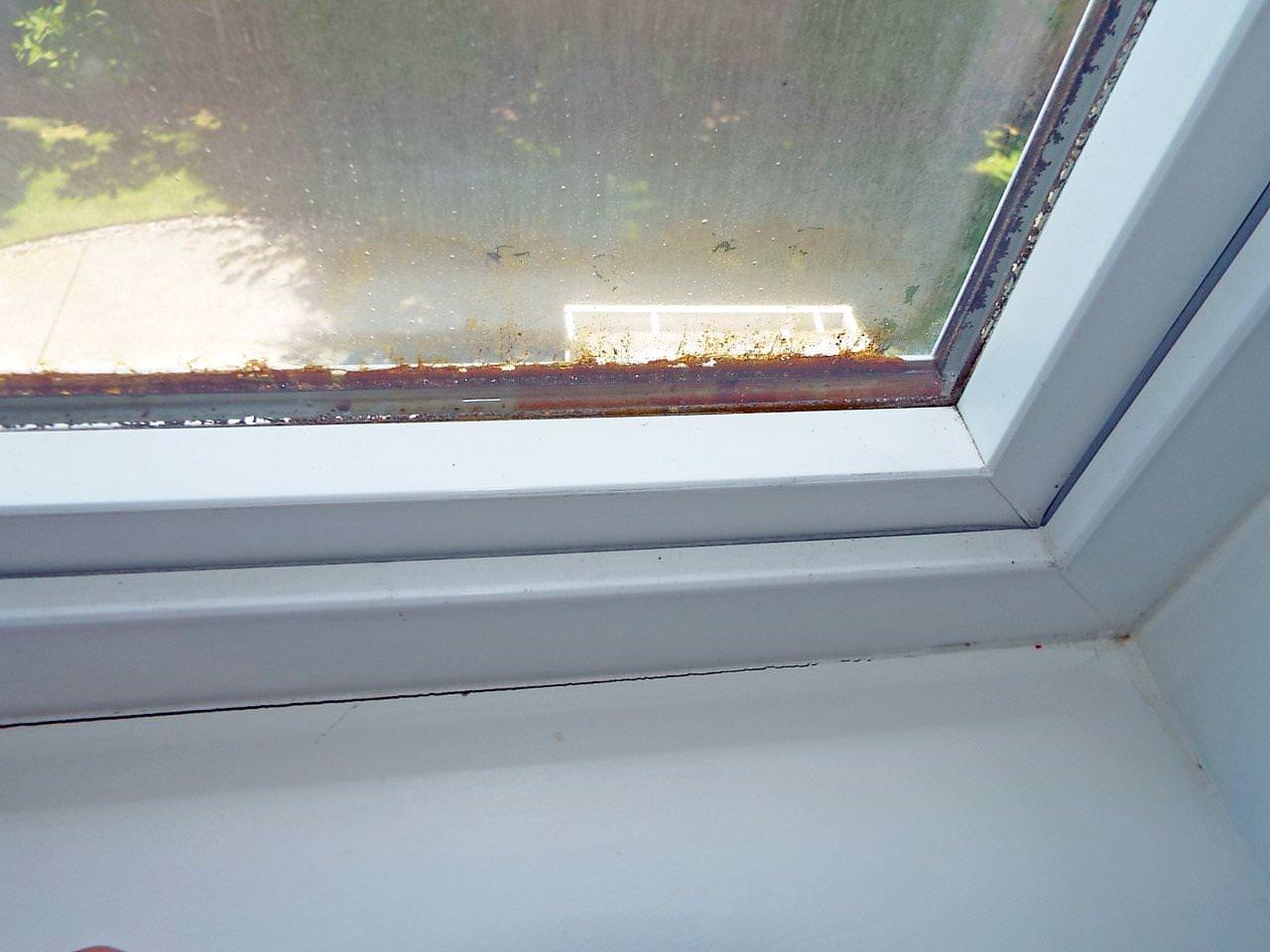
Rusting space of a failed seal
Windows that are not in the direct sun are much less affected, with windows on the West side being the next most common.
So are these windows with the Warm Edge technology spacers failing prematurely? Only time will tell for sure—but I am beginning to think so.
Perhaps we need to re-think the whole business of double pane windows for our homes. A return to the removal pane type double pane windows like Pella (still makes) and Anderson used to make could be an option and makes a lot of sense on many levels.
By Charles Buell, Building Consultant
If you enjoyed this post, and would like to get notices of new posts to my blog, please subscribe via email in the little box to the right. I promise NO spamming of your email
