 It starts innocently enough. You have an idea — a simple idea — the kind of idea a normal human should sketch on a napkin and revisit after lunch. But Project‑brain smells blood. It lunges out of the shadows like a rabid raccoon discovering an unlocked trash can. Within minutes, your mind is no longer your mind. It’s a rogue contractor with no permits, no OSHA compliance, and absolutely no respect for circadian rhythms.
You tried to sleep. You really did. But Project‑brain scheduled a mandatory all‑hands meeting in your skull.
- “What if we move the load path two inches?”
- “What if the insulation is alive, self‑installing and air-sealing?”
- “What if the entire assembly rotates like a merry-go-round, minus the horses, to shed water?”
You attempted to make a motion to “adjourn,” but Project‑brain overruled you by a 1–0 majority–and yet you enthusiastically approved the whole plan.
When you finally drift off for 90 seconds, you dream up a solution so brilliant it could simultaneously win a Nobel Prize in Physics, Architecture, and Basket-weaving.
Then you wake up and realize your “perfect solution” requires antimatter, a time machine, new types of welding and a species of wood that does not exist on this planet.
Project‑brain does not need food. Food is for people who aren’t on the brink of inventing the next great building‑science breakthrough. It merely attempts to rearrange the shelves to reduce condensation when you open the refrigerator and you forget why you opened it.
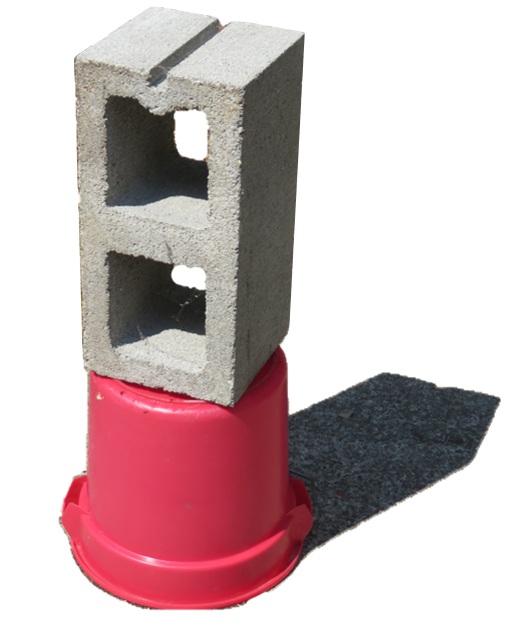
Eventually, Project‑brain forces you into the field. This is where the real danger begins. Because while your conscious mind is thinking, “Maybe I should get a ladder,” Project‑brain is thinking, “Ladders are for sissies and there is a perfectly good bucket you can stand a concrete block on top that is much closer.” Isn’t that what the steps are for?
This is how people sprain ankles, bruise ribs, and invent new swear words.
These obsessive project spirals resemble several well‑documented cognitive patterns:
- Hyperfocus — intense, sustained attention that blocks out basic needs.
- Sleep deprivation effects — impaired judgment, slower reaction time, increased injury risk.
- Task‑intrusive rumination — involuntary and aggressive replaying of tasks, problems, or designs.
- Creative ideation loops — the brain generating solutions faster than it can evaluate them, with only an “Approved” box to check.
Of course, Project-brain applauds all of this with glee!
While not inherently “medical conditions,” they do overlap with patterns seen in ADHD, anxiety‑driven hyperfocus, and burnout cycles. If someone experiences persistent sleep loss, compulsive work behavior, or physical exhaustion, a healthcare professional is the right person to evaluate what’s going on. Project-brain WILL NOT AGREE with this idea, however.
When you wake up and look at your notes, your sketches, the half‑assembled prototype on your workbench that appears to violate at least three laws of thermodynamics and one law of the State of Washington, you hear a voice inside that same skull whisper: “What the hell were you thinking?”
Project‑brain is a powerful creature. It can invent, reinvent, conjure and even injure. It can produce genius or nonsense, sometimes both in the same hour. It is the reason great ideas exist — and also the reason caffeine and ibuprofen exist.
This time things worked out OK.