All the caulk in the world may not prevent your shower and glass door enclosure from leaking.
In fact, caulk can make it worse.
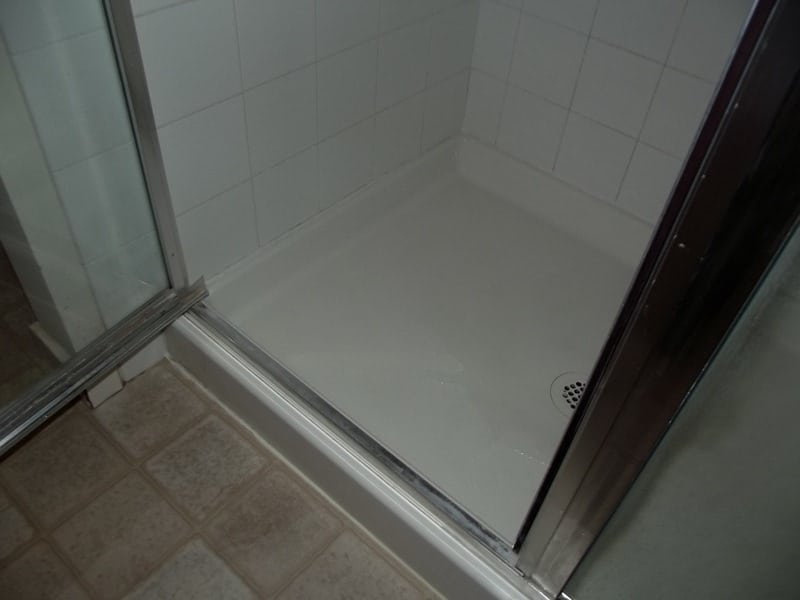 I have done posts in the past about not caulking the connection where tile shower and/or tub enclosure meets the tub or the one-piece shower base.
In the following picture one can see a typical tile shower and its one-piece plastic base.
These types of shower assemblies are very common in modern construction and perform very well when installed properly.
While I don’t want to get too technical, suffice it to say that if the connection is caulked, any moisture that eventually finds its way through the grout lines (and some will over time) will not have a route of escape. The moisture is then trapped behind the tile.
This results in unsightly mold growth behind the caulk around the base of the shower (or tub) and in many cases will result in the water being directed “outside” the shower where it can find its way into the wall and floor outside the shower.
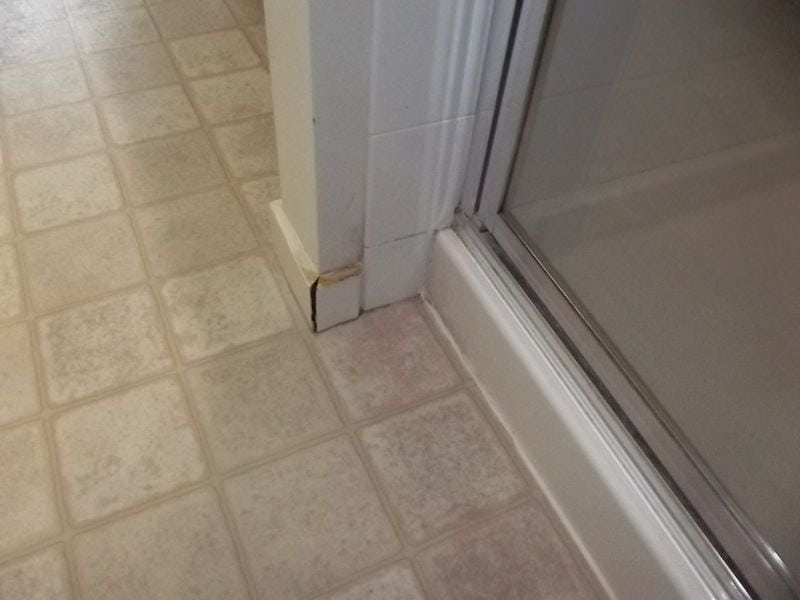
Damage to the baseboard visible in the picture below is very common with this caulking mistake.
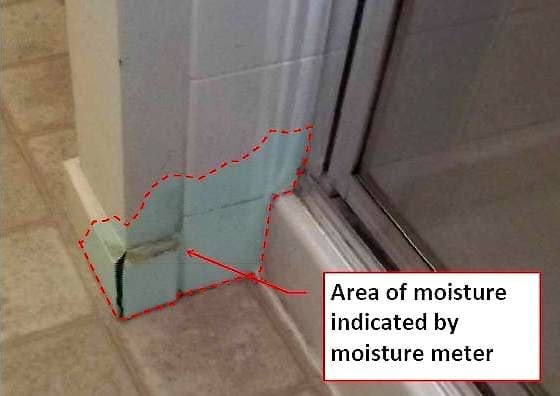
It was once considered “best practice” to only grout the wall/shower base connection. The TCNA (Tile Council of North America–the Gods of how to do tile installations properly) used to approve two methods of sealing this connection between the shower (or tub) base and the tile enclosure. You could either grout the entire joint or caulk the entire joint–but not caulk “over” the grout. The 2015 Best Practice Guide from TCNA calls for use of “flexible grout” in nearly all applications. This flexible grout is neither caulk nor grout but does the job of both with the exception that it is not a vapor barrier like caulk would be.
It is also important to make sure the weep holes built into the shower base are left open–as an escape route for trapped moisture.
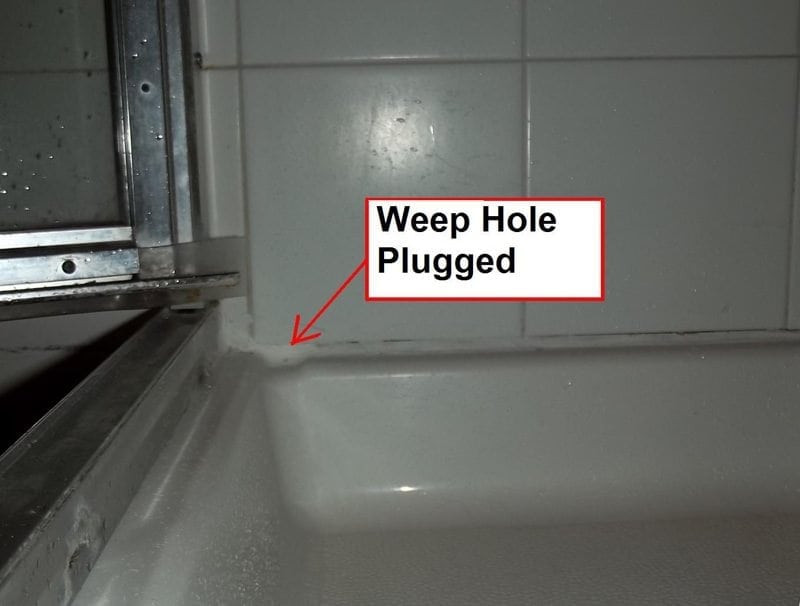
Tubs do not have these weep hole details so not caulking over the grout on a tub/tile wall connection is even more important.
Everyone has likely seen the unsightly blackening of caulk around this connection. No amount of scrubbing and bleach seems to have any impact at all. That is because the black is “behind” the caulk and merely visible through the semi-translucent caulk.
It takes considerable attention to detail to get these connections sealed properly.
This improper caulking detail is not the only cause of damage like this to the walls and floor outside of the shower–but those other reasons will be the topic of future posts.
By Charles Buell, Seattle Building Consulting
If you enjoyed this post, and would like to get notices of new posts to my blog, please subscribe via email in the little box to the right. I promise NO spamming of your email!