Cold bedrooms can really put a damper on things–in fact having heat in bedrooms is one of the code requirements to make the room habitable space.
It is actually not that common to find bedrooms with no heat supplied to them. If they do not have heat it is usually because it is new construction and somebody “forgot” that room, or in older homes with crawl spaces the ductwork sometimes becomes disconnected.
Most people won’t put up with not having any heat in bedrooms, so the issue usually gets resolved pretty quickly.
I had a very interesting situation at a recent inspection. There was hot air, in the 90’s, at all registers in the home except for one in one of the bedrooms, and that register measured in the upper 60’s.
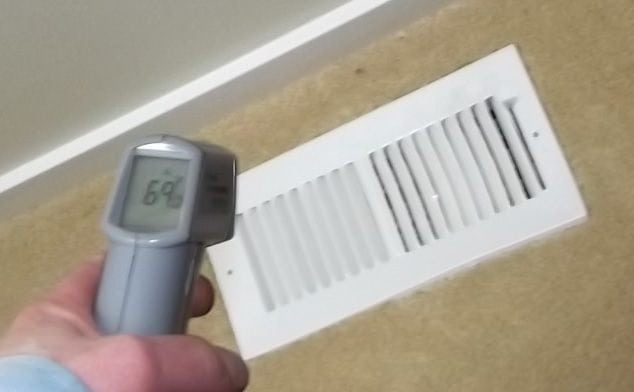
Cool air at heat register
As soon as I walked into this bedroom the room was noticeably cooler than in all other parts of the home.
It turned out that, very near the furnace plenum, where the heat duct for that room left the furnace there was a fresh air intake into the ductwork from outdoors just below it. In the picture one can see the overlaid blue arrow that is the air intake duct.
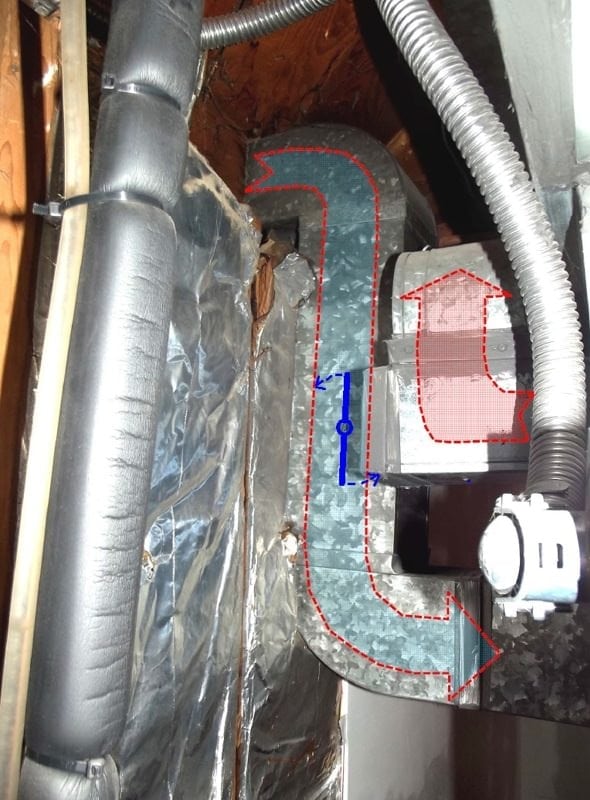
Air intake in conflict with heating and cooling
All the time the furnace was running this cold air coming in from outside was diluting the heated air being delivered to the room (as indicated by the red arrow). This air intake damper (indicated by the blue line) was designed to be operated manually and should be closed in the winter. It was designed to be opened in the summer so that fresh air could be distributed throughout the home with the furnace in “fan” mode.
As you can see in the following picture the air is moving into the air intake enough to pull tissue paper up against it.
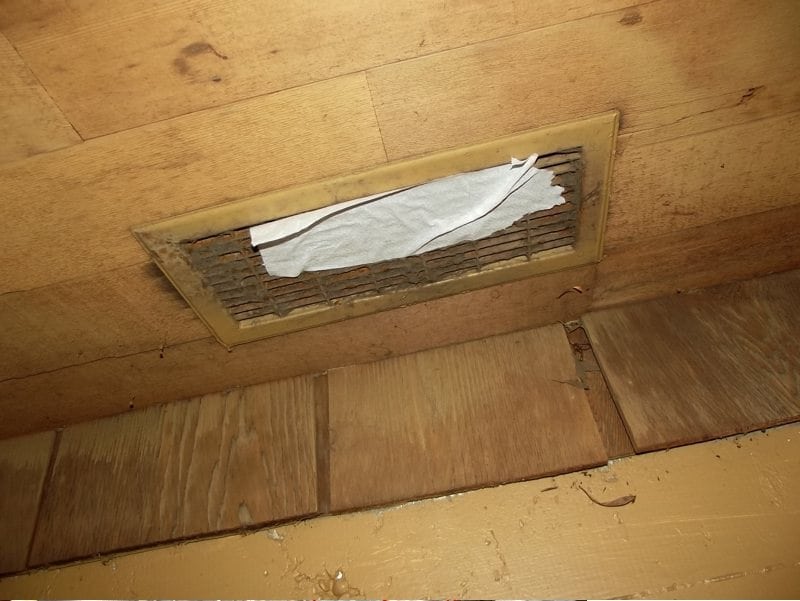
Air intake at the outside of the home
We would not use this type of system today. Similar systems today work with electronic dampers that would automatically stay closed in “heating/cooling” mode and automatically open in “fan” mode.
While this room would never have been as cold as outdoors, I have to wonder how long it has been unsatisfactory like this. Did the owners wonder why it was cooler and just put up with it? In summer in cooling mode this room would likely not have been as cool as other rooms as the hot outdoor air would be mixing with the cooler conditioned air.
As soon as the damper was closed, the room immediately warmed up just like the other rooms in the home.
Some of this work just isn’t rocket science.
By Charles Buell, Seattle Building Consulting
If you enjoyed this post, and would like to get notices of new posts to my blog, please subscribe via email in the little box to the right. I promise NO spamming of your email! 🙂