A Technical Overview of Hygrothermal Performance, Durability, and Real‑World Thermal Efficiency
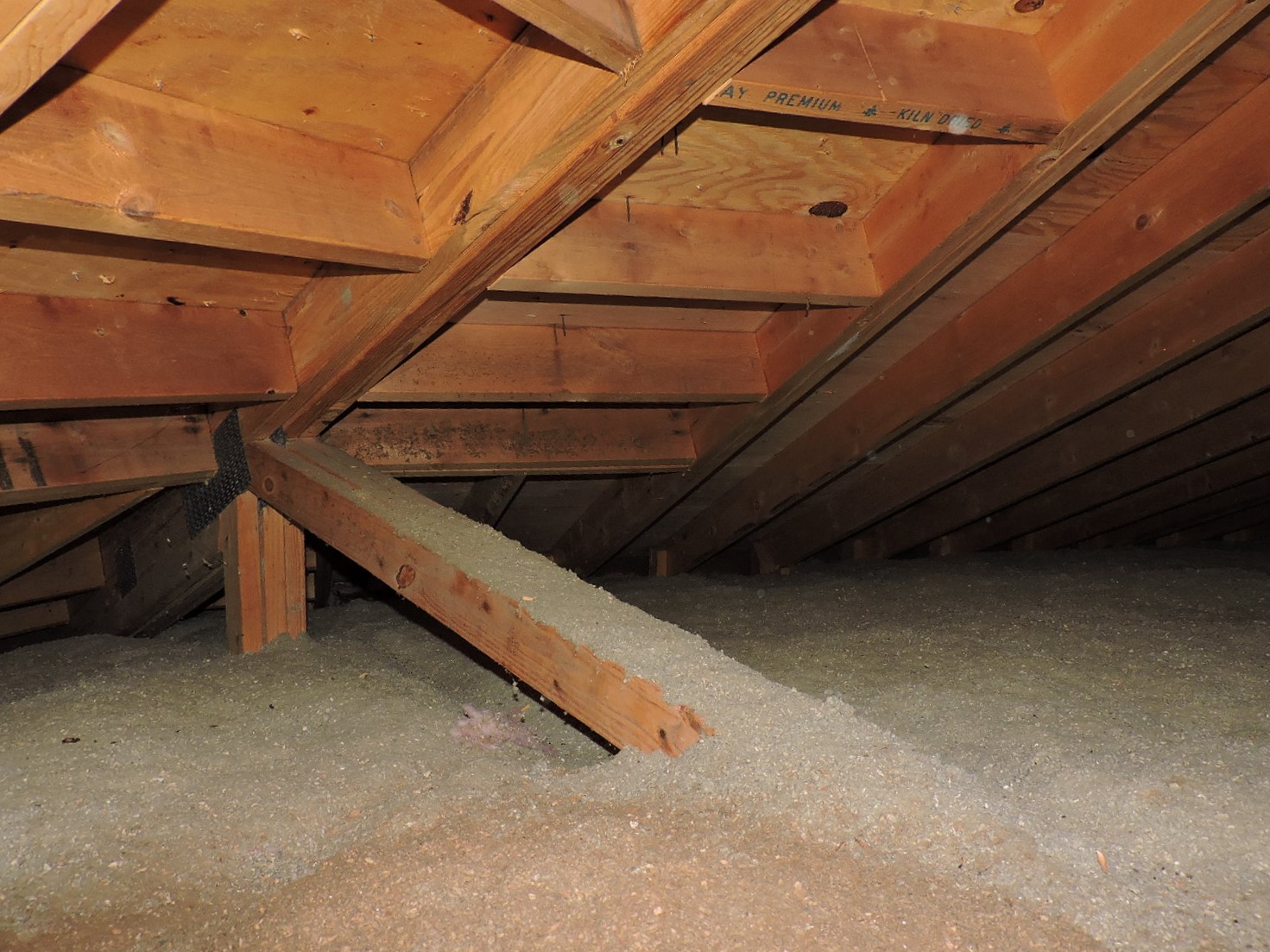
40-year-old cellulose
🌲Cellulose fiber insulation remains one of the most stable and predictable materials for attic insulation, largely because its density and granular structure prevent the convective looping and wind‑washing that routinely collapse the real‑world R‑value of low‑density fiberglass. In cold, ventilated attics typical of most homes, cellulose maintains its thermal performance because it resists internal air movement and stays uniformly distributed across the attic floor. Its borate treatment provides long‑term resistance to mold, insects, and fire without degrading over time, and its vapor‑open but moisture‑tolerant characteristics allows the attic to dry naturally without trapping moisture against the roof deck or ceiling materials.
🌲
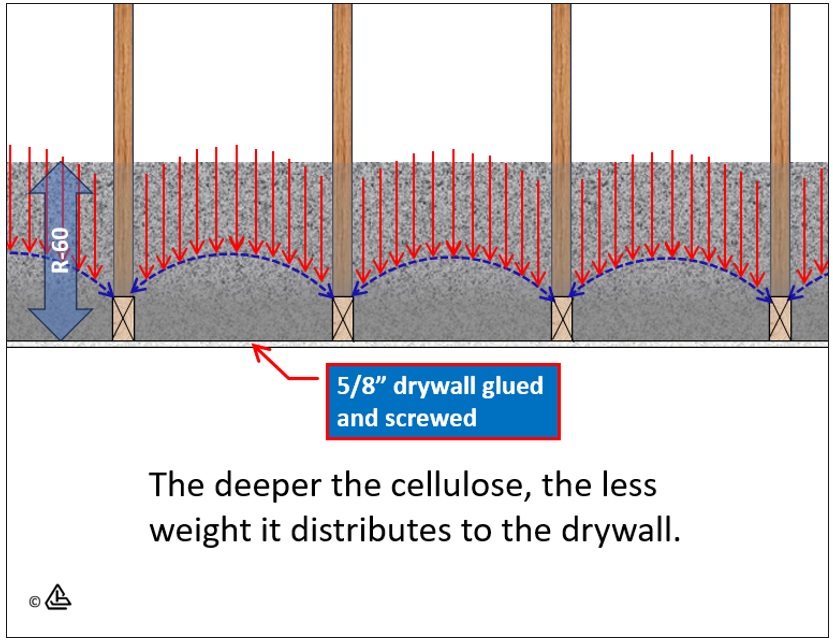
When installed at modern performance depths— R-49 and above — the material behaves more like a granular medium than a loose, fluffy insulation. Deep cellulose exhibits arching that redistributes some portion of vertical load laterally to joists, reducing the fraction borne by the gypsum ceiling; the magnitude of this effect depends on density, depth, and confinement geometry. Installers sometimes observe this when removing ceiling drywall beneath deep cellulose: a curved, cohesive section of insulation can remain briefly suspended before it needs to be physically disturbed. This suggests that at sufficient depth, joists and top plates carry a meaningful share of the load, reducing the portion borne directly by the ceiling— in contrast to fiberglass, which does not exhibit the same bridging behavior and transfers most of its own (considerably lighter) weight straight down.
🌲
Cellulose also provides hygric buffering, absorbing and releasing small amounts of moisture vapor. Mold growth generally requires sustained surface moisture, often driven by elevated humidity or condensation, rather than standing liquid water. The borate treatment in cellulose helps resist fungal activity under elevated moisture conditions. Fiberglass, by comparison, allows moisture-laden air to pass through more freely, which can make condensation within its low-density matrix harder to detect. Cellulose’s moisture buffering may help moderate humidity swings and reduce the likelihood of cold-surface condensation at the roof deck, contributing to attic durability over time.
🌲
Cellulose’s performance advantage over fiberglass tends to be most noticeable at the attic perimeter, where wind-washing can reduce fiberglass’s effective R-value significantly — by half or more in some studies. Cellulose’s density makes it more resistant — though not immune — to this effect, helping maintain coverage and limit cold air infiltration into the insulation layer. Combined with proper air-sealing at the attic floor and continuous baffles at the eaves, cellulose can create a more stable thermal layer across seasons, and raised heel trusses further reduce perimeter losses. Cellulose fiber itself does not readily break down under normal conditions and is generally regarded as durable for the life of the structure. It does settle somewhat after installation — typically accounted for by installing extra depth or by using manufacturer settled-R-value tables — after which further settling is minimal.
🌲
Overall, cellulose insulation offers predictable thermal behavior, moisture buffering, and long-term stability, and tends to perform particularly well relative to fiberglass in real-world attic conditions affected by air movement and wind-washing. Its density, resistance to air movement, and moisture-buffering properties make it a strong option for retrofit or new construction attics where long-term performance and moisture management are priorities.