In homes where there were energy codes in place at the time of construction, there is one particular defect that is fairly routine for a Seattle Home Inspector. In the State of Washington, energy code requirements have been in place since the early 90’s, so after that time, one should not be seeing this particular defect.
 Even the “Shadow” knows–and you should be aware of it too.
Attic access hatches.
These hatches are required to be insulated and weather-stripped to prevent the loss of heat and the transfer of moist house air into the attic space. As wind blows past the home and due to the “stack effect,” there are tremendous natural forces to push and pull house air through the attic access opening. Proper installation of the weather-stripping can stop this transfer. This is especially important in really cold climates. Stack effect works around the clock, so whether you are heating or cooling, lost of conditioned air into the attic space should be avoided. Fortunately for us in Seattle we do not really have a “cooling season” being more or less naturally air conditioned.
The interesting thing is these hatches are very rarely NOT insulated and weather-stripped. You are probably wondering why I am blogging about the weather-stripping then? Because, a huge percentage of the time, the weather-stripping is non-functional–and might as well not be there. Sometimes it is the people that insulate the attic who install the weather-stripping on the hatch cover. They install it so it sits on top of the drywall that wraps the opening of the access. It looks perfect and functions as intended.
UNTIL…..
Along come the interior wood trim installers. They want the opening to look prettier than the plain old drywall look and so they install a nice decorative trim board around the inside of the opening. And it does indeed look “SAWEEEET!” However, because the top edge of the trim is higher than the drywall–it hits the face of the cover “inside” the weather-stripping leaving the weather-stripping high and dry–not in contact with anything.
I think you can get the picture by looking at the picture below. The red line is the weather-stripping on the cover that is tilted up to be lifted out of place. The blue line is the top edge of the wood trim.
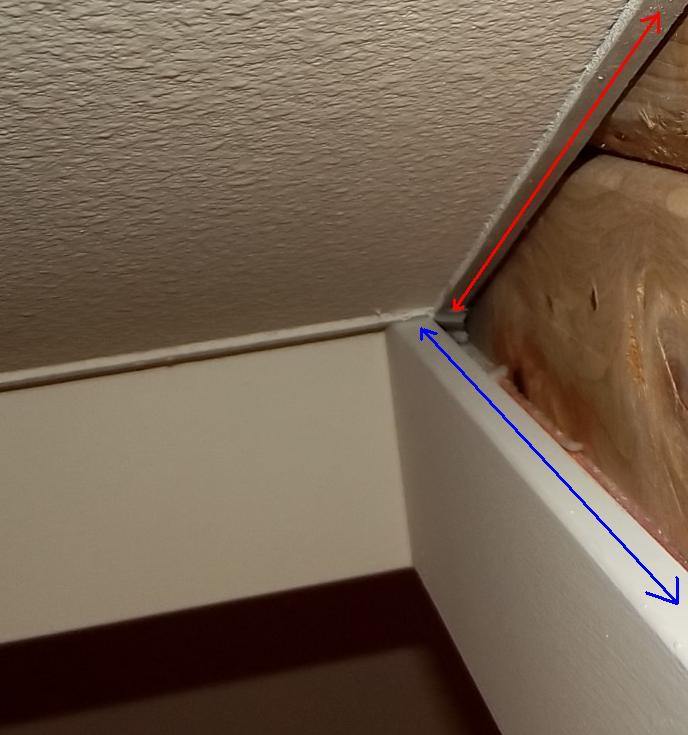
Close but no cigar—as they say.
By Charles Buell, Seattle Building Consulting
If you enjoyed this post, and would like to get notices of new posts to my blog, please subscribe via email in the little box to the right. I promise NO spamming of your email!