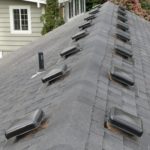
Builders, roofers, insulation contractors, homeowners and home inspectors are seemingly dazed-n-confused about attic ventilation. Lets first discuss what the purpose of ventilating the roof is. The primary purpose is heat reduction. With the ventilation necessary to accomplish this it will also remove very minor amounts of moisture that may find its way into the space … [Read more...]
Simply EXHAUSTED!
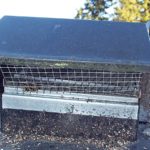
Most bathrooms have exhaust fans in them—or should. Most modern codes (Washington State) require exhaust fans even if there is a window that can be opened. If we do not control moisture levels in our bathrooms, it can not only have a detrimental effect on the bathroom itself, it can also create moisture issues for the rest of the home. We all know how useful it can be … [Read more...]
Hope will not help—unless that is the workers name!
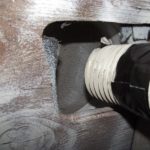
Hope is almost always like "frosting on a turd." People often ask me if it is OK for bathroom exhaust vents to terminate in the attic. There was a period of time when lots of builders considered the attic "outdoors." Well of course, it did not take too long to figure out that the attic environment is anything but "outdoors." If the attic was outdoors, the temperature and … [Read more...]
If I don’t know what it is—how can it be important?
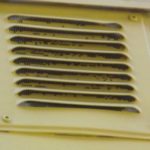
Since 1991 in Washington State, some means of bringing fresh air into the home has been required by the Washington State Energy Code. This requirement is for new construction as well as significant remodels. So, as an inspector, I am always looking for these systems. On remodels it is common to find these systems missing. When they are missing it is one of the … [Read more...]
Raining and 35°—-why shouldn’t I cover my crawl space vents in the winter?
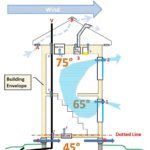
It is OK to leave them open—that is how it works in the Northwest. I know that it may seem counter-intuitive, but you can actually lower the humidity in your crawl space by bringing in that wet air in the winter. I will attempt to keep it as simple as possible by speaking in “generalities” as opposed to specific temperatures and humidity levels. Lets take air that is very … [Read more...]